If you function, or plan to work, in construction anywhere in Australia, you need a construction induction card, better referred to as a white card. In South Australia, every person that sets foot on a building and construction site for work, from pupils and labourers with to site supervisors and project designers, need to hold a legitimate white card.
The catch is that training rules are not the same across the nation. What you can do in Queensland or Western Australia is not constantly allowed in South Australia. So when you see advertisements for "online white card SA" or "SA white card online", it is reasonable to ask whether you can truly finish the entire thing from home, or whether there is a sting in the tail and you will ultimately need to sit in a classroom.
I have educated and managed numerous employees via white card training in several states and territories. The brief solution for South Australia is: yes, you can study from home, but just in a details way that satisfies SafeWork SA requirements. Simply self‑paced e‑learning that you click through alone is declined for SA white card training.
Let us unpack what that means in technique, exactly how it compares to other states, and how to prevent losing your cash on the wrong sort of course.
What a white card really is (and what it is not)
A great deal of the complication around "white card online" originates from misinterpreting what the card represents. The white card is not a qualification in woodworking or civil building and construction. It is a national building and construction induction card that verifies you have been trained in basic work health and wellness for building work.
Different states and territories made use of to release different coloured cards - blue, red, eco-friendly - and now they are all described as white cards. Whether you do a white card in Melbourne, Darwin, Perth, Hobart, Sydney or the Sunshine Shore, the underlying national unit of expertise is the same: CPCWHS1001 Prepare to function safely in the construction sector (previously CPCCWHS1001 and CPCCOHS1001A).
In practice, that training covers:
- The main reasons for injury and casualty on building websites, such as drops, mobile plant, electrical power and structural collapse. Your lawful duties under WHS regulations, both as an employee and (if relevant) as a supervisor or PCBU representative. How to identify fundamental building hazards and apply suitable controls. Safe use of personal safety equipment. Incident reporting, website induction procedures, and the right to refuse unsafe work.
It is a beginning safety training course, but it is still across the country identified veterinarian training. Registered Training Organisations (RTOs) need to follow stringent regulations on just how they provide and evaluate it. That is where the discussion regarding on-line white card training starts.
Why distribution mode matters so much
White card training has a chequered history. Years back, a wave of low-cost online white card courses appeared. Many people clicked via in under an hour, thought answers until they passed, and never spoke to a trainer. Some cards were even released to people outside Australia that had never ever established foot on a regional website. Regulatory authorities were not impressed.
As a result, many vic white card states tightened their guidelines. They wanted to see:
- Verified identity and real participation. Real communication with a fitness instructor or assessor. Assessment tasks that proved understanding, not just multiple‑choice guesswork.
That is why you now see such different rules for white card training throughout Australia, and why "white card online Darwin" or "white card program Perth" can have a very different lawful definition from "online white card SA".
What South Australia actually permits on-line white card
SafeWork SA acknowledges white cards released by RTOs that provide CPCWHS1001 according to its conditions. Those conditions concentrate greatly on mode of shipment and assessment.
For South Australia, the key points are:
- See the learner. Interact with the learner. Verify identification and monitor assessments.
So when you see "on the internet white card SA" or "SA white card online", examine what "online" suggests. If it is a set up virtual class where you sign up with from home, your camera is on, you interact with the trainer, full tasks live, and the RTO checks your ID, that can meet SA rules.
If it is a 45‑minute click‑through with a couple of tests and no live instructor, your certificate is unlikely to pass a real white card check on a South Australian site.
From an employee's point of view, this is good news. You can still study from home, but the training has to be real.
How this compares with other states and territories
Because white cards are national, people move. I consistently meet employees that completed a white card in Darwin and now service a project in Adelaide, or tradies that started in Perth and then move to the Gold Coastline or Sydney. So it helps to comprehend exactly how each territory deals with on the internet training.
Here is a useful photo, with the caution that regulators do periodically upgrade their policies. Constantly validate with the appropriate state regulator or a reliable RTO.
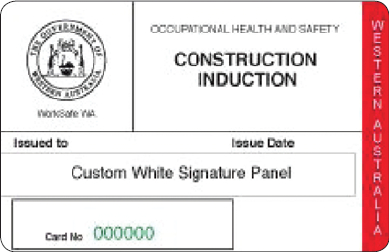
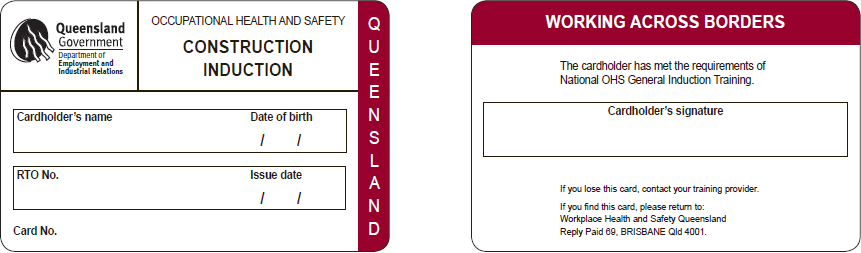
- Queensland white card: Queensland was an early moving company in permitting organized online white card training. You will certainly see several deals for "white card online QLD" and "white card course Queensland". These training courses are not simply loosened e‑learning. They call for ID checks, occasionally video clip or phone interaction, and controlled analyses. A genuine Queensland white card (issued by a certified RTO) is approved nationally, consisting of in South Australia. Western Australia white card: WA has white card training Perth based, along with local offerings. Some RTOs supply partial online concept with in‑person or supervised assessment. "Substitute white card WA" is likewise a common request; SafeWork WA identifies replacement cards from legitimate previous training records. Northern Area white card: For white card training Darwin or a white card Darwin NT, numerous companies run short face‑to‑face training courses, typically in a half‑day block, specifically to support FIFO workforces. Some use remote or virtual class versions for distant neighborhoods, however once again, self‑paced online without an instructor is high-risk for compliance. Tasmania white card: Look terms like "white card hobart" or "white card course Hobart" normally bring about short in‑person training courses. Some Tasmanian RTOs try out online delivery under limited controls, specifically throughout covid limitations, however regulators kept a close eye on evaluation quality. New South Wales and Victoria: White card NSW and white card Victoria training is usually face‑to‑face or using rigorous online classroom. For white card Melbourne or white card course near me looks around Sydney, expect to participate in a set up session and present ID in actual time. South Australia: As defined, white card SA training can be face to face or through live online delivery where the instructor connects with you. When you see "online white card SA" and "white card training SA", that is what you should be looking for.
The wide pattern is basic. Regulatory authorities currently approve that virtual classrooms can, if handled correctly, be equivalent to a physical classroom. What they reject is anonymous, unproctored e‑learning where nobody can be sure that did the evaluations, or whether they understood the material.
Studying from home in SA: what it really looks like
For a common https://elliottsglv949.fotosdefrases.com/how-much-does-a-white-card-cost-contrasting-costs-throughout-australian-states South Australia white card session delivered online, you can expect something like this.
You book right into a set up course with an acknowledged RTO that clearly specifies its white card training is approved in SA. The scheduling verification will certainly provide you a date and time, videoconference link, information of called for ID, and possibly a pre‑course questionnaire. On the day, you visit a couple of mins early, examination your electronic camera and microphone, and have your ID ready.
The fitness instructor checks each person into the session. This is not a procedure. They need to be pleased that you are the individual whose name will certainly go on the certification. That might entail holding your permit or key approximately the electronic camera, addressing a few inquiries, and confirming your address and call details.
Over the next few hours you work through the web content with the trainer. A good fitness instructor does not simply recite the guidebook. They will utilize brief case studies, conversations, and examples from SA construction websites. Somebody will certainly share a story regarding a close to miss on a scaffold, or an unreported incident with a mobile plant. These tales are important. They link the lawful structure to real behaviour.
Assessment tasks may include:
- Short composed responses, typed or transcribed and scanned. Demonstrating just how to fit fundamental PPE. Talking through what you would do in a given circumstance, such as finding broken electric cables in a wet area or uncovering an unguarded excavation.
The trainer observes, asks follow‑up inquiries, and confirms that you have actually fulfilled the efficiency criteria. Only after that do they provide the Declaration of Accomplishment, which enables a white card to be produced.
Done correctly, this feels similar to a little class where everybody takes place to be on display. You might be in Adelaide, somebody else in Port Augusta, one more individual functioning from a website workplace on the outskirts. The important component is that everyone exists and involved, not treating it as a history tab while they do various other tasks.
How long, how much, and what you obtain for it
Across Australia, a standard white card program commonly competes around six hours of training and analysis. Some RTOs run it as a single block, others split it throughout 2 shorter sessions. Be questionable of any type of provider assuring a white card in under two hours without any communication. That is precisely the type of training regulators have actually been attempting to stamp out.
White card expense varies by company and region. In SA, for an online or virtual class white card, you will usually see prices someplace between regarding $80 and $150 for individuals, sometimes less for group bookings or for apprentices prepared via group training organisations.
At completion, you need to receive:
- A Declaration of Attainment for CPCWHS1001 from the RTO. Either a physical white card posted to you, or instructions on how the card will certainly be released by the relevant authority.
For national mobility, what issues is that the RTO is authorized to provide white card training, https://charlievrcq152.wpsuo.com/white-card-nsw-current-legislations-recognition-and-training-choices that the device code is proper, and that the shipment method abide by the regulator's expectations in the state of issue.
Choosing a reputable online white card program in SA
Marketing copy can be slippery. I have seen web sites marketing "white card online Darwin", "white card Perth course", "white card gold coastline" and "on-line white card SA" with practically identical wording, although the underlying conformity policies are different in each state.
When you are selecting a supplier for SA, do a fast due diligence check. This is where a short checklist is really helpful.
Confirm the RTO's enrollment: Search for the RTO number on training.gov.au. Check that CPCWHS1001 gets on their range and that they are accepted for white card training in the state where they say they are issuing it. Ask about delivery setting: Make them explain exactly how the program runs for South Australia. You are trying to find "live online classroom" or comparable, not unguided e‑learning. Clarify ID and participation requirements: A reputable SA white card course will demand evidence of identification and full participation. If a company is kicked back about those, stroll away. Check acknowledgment in SA: Ask directly whether their program meets SafeWork SA needs for building induction. Trustworthy carriers will respond to clearly and must be prepared to indicate regulator guidance. Compare support and scheduling, not simply price: A couple of additional bucks spent on a specialist, well‑run program usually conserves headaches later on if you ever need to show proof of training, obtain a white card substitute SA, or job interstate.If any of those questions are difficult to answer, that is a red flag.
Step by‑step: just how to get an on-line white card in South Australia from home
For most students, the whole process from choosing to do the course to having a usable white card is determined in days, not weeks. Below is the sort of sequence I normally see work smoothly.
Search smart: Instead of just keying "white card near me", include "South Australia" or "white card SA" and filter for RTOs that plainly mention compliance with SafeWork SA and online classroom options. Verify the supplier: Use the RTO number on training.gov.au and, if needed, call or email to validate on the internet delivery for SA is by online trainer, not self‑paced click‑through. Book and prepare: Pick a session that fits your routine. Review any kind of pre‑course product, examination your net link, ensure your cam and microphone work, and gather your ID records. If English is a second language for you, ask whether language support is available. Attend totally and get involved: Treat the on-line white card training course as you would a face‑to‑face training course. Minimise disturbances, participate in discussion, ask inquiries, and keep in mind. Instructors can inform when someone is only half there, and they are within their legal rights to withhold a Declaration of Accomplishment if you do not demonstrate competency. Receive and safeguard your proof: When your Declaration of Accomplishment and white card arrive, keep them firmly. Take clear pictures or scans for backup. If you ever work interstate, those records will certainly make it less complicated to take care of white card substitute, whether you wind up in WA, QLD, NT or back in SA.From my own experience, the biggest time‑wasters are not the training course itself yet individuals showing up with no ID, poor net that constantly leaves, or presuming they can multitask their means through while on the tools. Give the session a solid half‑day of your focus and you will normally make it through without drama.
How all this plays out on actual sites
Construction managers are much more attentive concerning white card credibility than they were a decade ago. On a business integrate in Adelaide or a local civil task outside Whyalla, I have seen site managers do a fast white card examine every person at induction. That can suggest:
- Confirming the card aesthetically and cross‑checking the name with the individual's ID. Checking the providing RTO if the card looks uncommon or very new. Asking questions regarding when and where the person did their training.
If your white card was provided by a recognised RTO in SA, QLD, WA, NT, NSW, VIC or TAS, and the card details match your ID, you must be fine. Employees in some cases fret that a card from interstate, such as a Queensland white card or NT white card, will certainly not be approved in SA, but the nationwide mutual acknowledgment plans are fairly robust.
Problems often tend to occur when:
- Someone acquired a suspicious "white card online" without appropriate assessment. Details on the card do not match their lawful name or day of birth. They completed training a long time ago under old devices and never ever worked in construction, so the supervisor inquiries their functional understanding.
In those cases, a great manager might ask the employee to redesign present white card training before going into the website. This is not regarding penalizing anyone, it has to do with risk. If an employee can not define standard controls for real-time electric work, or does not understand their right to quit hazardous job, they are an obligation to themselves and others.
Renewal, substitute, and relocating in between states
Another factor of confusion is white card revival. At the time of writing, there is no fixed national expiration day for a white card. Theoretically, a white card stands forever as long as the worker stays energetic in the building industry.
However, website plans differ. Some major professionals deal with five or 6 years without building and construction job as a reason to need retraining, also if the card itself has actually no published expiry. They want to know that you are not trying to re‑enter the industry with knowledge iced up in time from a years ago.

Replacement is a different concern. If you shed your card, you normally go back to the RTO that released it and ask for a substitute card. That is why you periodically see search terms like "white card perth replacement", "replacement white card WA", or "white card replacement SA". As long as the RTO still exists and you can verify your identification, replacing the card is typically straightforward.
If the issuing RTO has shut, or your records are missing, things get more challenging. In some cases you can recover proof via the state's training documents system. Other times, you might discover it much faster and cleaner to finish a brand-new white card program, particularly if your old training was under a previous system code and many years have passed.
The bottom line is straightforward. Maintain digital copies of your Declaration of Accomplishment and card someplace risk-free. That practice has saved a great deal of individuals from uncomfortable conversations at induction.
How SA's technique suits the nationwide picture
South Australia has actually ended up in a practical happy medium. It acknowledges that not everyone can attend a physical class, particularly workers in remote regions of the state, yet it urges that online white card training have to still be actual training. That is the same direction most states are moving, whether you check out a Perth white card program, white card training Darwin NT, or white card training Hobart.
From a student's point of view, the label "online" is lesser than the material. The necessary concerns are:
- Will I interact with an authentic fitness instructor that can answer my concerns and probe my understanding? Will my identification and engagement be effectively validated to ensure that my card withstands scrutiny on site? Does the training course satisfy the regulator's problems in the state where it is issued?
If the answer to those questions is indeed, then studying from home in South Australia is not only feasible, it can be as durable and beneficial as sitting in a class in Adelaide's CBD. If the solution is no, you might be throwing money at a certificate that will certainly fall apart the first time a person does a thorough white card check.
The building market has enough actual risks without adding dodgy induction training to the checklist. Treat your white card training course as your first major safety rundown in a harmful sector, not simply a ticket to surpass the gate. Whether you are signing up with a household crew in rural SA, going to an industrial job in Melbourne, flying to the Sunlight Coastline for a civils job, or using up FIFO work out of Darwin or Perth, that foundation will serve you on a daily basis you get on the tools.